When an orchestral score calls for "gong," the percussionist faces an immediate question: which one? The term covers a vast family of instruments—from the unpitched roar of the tam-tam to the precisely tuned shimmer of Javanese bossed gongs. Different composers, writing in different eras with different dramatic intentions, require different instruments entirely.
This guide surveys the gongs of the Western classical orchestra, the repertoire that employs them, and the specific instruments each work demands. For sound healers, it offers a window into how composers have used these instruments for emotional and psychological effect—techniques applicable far beyond the concert hall.
The Two Fundamental Categories
Tam-Tam (Flat-Faced, Unpitched)
The tam-tam is what most people picture when they hear "orchestral gong": a large, flat-faced bronze disc, typically of Chinese origin, producing a complex wash of sound without a definite pitch. The term comes from Southeast Asian languages and was adopted by Western orchestras in the late 18th century.
Characteristics:
- Flat surface (no central boss)
- Produces a fundamental tone plus dense, inharmonic overtones
- Sound swells after initial strike, then decays slowly
- Creates a "crash" effect or a sustained roar depending on technique
- No definite pitch—blends with any harmony
Tuned/Bossed Gongs (Nipple Gong)
Bossed gongs feature a raised knob (boss or nipple) at the centre, which focuses the vibration and produces a clearer, more definite pitch. These are the gongs of Indonesian gamelan, Chinese opera, and certain orchestral works seeking specific Asian colour.
Characteristics:
- Central raised boss
- Definite, identifiable pitch
- Cleaner, more "bell-like" tone
- Often used in sets covering a range of pitches
- Associated with East Asian theatrical traditions
The critical distinction: When a score says "tam-tam," use a flat-faced unpitched gong. When it says "gong" (especially in opera or works with Asian settings), the composer often intends a pitched, bossed instrument. Context and period determine interpretation.
The Gong Enters Western Music
The first documented use of a gong in Western concert music was François-Joseph Gossec's Marche lugubre (1791), a funeral march for the revolutionary Count of Mirabeau. Gossec used the tam-tam for its then-exotic, ominous quality—associating it with death, the unknown, and theatrical gravity.
This established the instrument's orchestral role for over a century: the tam-tam meant death, disaster, or climactic moments of overwhelming emotion. It was a special effect, not a standard orchestral voice.
Repertoire Guide
Opera and Musical Theatre
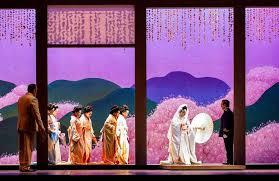
Madama Butterfly (1904)
Giacomo Puccini
Gong required: Japanese-style bossed gongs (tuned), plus tam-tam
Puccini's score specifies authentic Japanese gongs to evoke Nagasaki and Cio-Cio-San's world. The bossed gongs appear in ritualistic moments, while the tam-tam underscores dramatic climaxes. Major opera houses maintain sets of tuned nipple gongs specifically for this work.
Notable moment: The entrance of the Bonze (Act I) features temple gongs that must sound ceremonially authentic.
Turandot (1926)
Giacomo Puccini
Gong required: Chinese opera gongs (various sizes), tam-tam
Set in legendary Peking, Turandot demands an extensive battery of Chinese percussion including multiple gongs of different sizes and characters. The score calls for both bossed gongs and tam-tam, each serving different dramatic functions. The execution of the Prince of Persia, the riddle scenes, and the great crowd moments all feature gong colors.
Notable moment: "Nessun dorma" builds to a climax punctuated by gong strokes of triumph.
Salome (1905)
Richard Strauss
Gong required: Tam-tam (very large)
Strauss's one-act opera of obsession and decapitation uses the tam-tam for moments of horror and perverse ecstasy. The "Dance of the Seven Veils" features percussion throughout, but the tam-tam's most chilling moment comes at the opera's gruesome climax.
The Romantic and Late-Romantic Symphony
Symphony No. 6 "Pathétique" (1893)
Pyotr Ilyich Tchaikovsky
Gong required: Tam-tam
The finale's devastating coda features a single, soft tam-tam stroke—one of the most heartbreaking sounds in orchestral music. Tchaikovsky marks it pppp (as quiet as possible). The effect is of a distant death knell. The symphony premiered nine days before the composer's death.
Notable moment: The tam-tam stroke in the final Adagio lamentoso—understated, inevitable.
Symphony No. 2 "Resurrection" (1894)
Gustav Mahler
Gong required: Tam-tam (very large)
Mahler's apocalyptic second symphony uses the tam-tam at moments of cosmic weight. The finale—depicting the Day of Judgment—features tam-tam strokes amidst offstage brass, choral forces, and the full orchestra. Mahler's tam-tam is existential: it signals moments when the music confronts death and transcendence.
Notable moment: The return of the "Resurrection" theme in the finale, with tam-tam adding weight to the vision of eternal life.
Symphony No. 6 "Tragic" (1906)
Gustav Mahler
Gong required: Tam-tam, plus the famous "hammer"
The Sixth Symphony's finale features three (originally five) blows of a wooden hammer—"like an axe-blow"—plus extensive tam-tam work. The tam-tam represents fate; the hammer represents its blows. This symphony ends in unambiguous tragedy, with the tam-tam's final stroke cutting off any hope.
The 20th Century and Beyond
The Rite of Spring (1913)
Igor Stravinsky
Gong required: Tam-tam
Stravinsky's revolutionary ballet score uses tam-tam sparingly but effectively, as part of a large percussion section that also includes bass drum, timpani, guiro, triangle, tambourine, cymbals, and antique cymbals. The tam-tam adds weight to the sacrificial climaxes of Part II.
Notable moment: "Sacrificial Dance"—the chosen virgin dances herself to death with the tam-tam punctuating her final moments.
The Planets: Mars (1916)
Gustav Holst
Gong required: Tam-tam
"Mars, the Bringer of War" builds to a shattering climax featuring tam-tam strokes that evoke mechanised warfare. Holst wrote the movement as World War I raged; the tam-tam's crushing weight became part of the musical language of military horror.
Et exspecto resurrectionem mortuorum (1964)
Olivier Messiaen
Gong required: Multiple tam-tams of different sizes
Messiaen's memorial work for the dead of two world wars employs tam-tams extensively throughout its five movements. The orchestration—for winds, brass, and metallic percussion only—gives the gongs unprecedented prominence. The tam-tams represent the threshold between life and death, the veil beyond which resurrection waits.
Notable moment: The third movement features tam-tams with almost supernatural presence.
Daphnis et Chloé (1912)
Maurice Ravel
Gong required: Tam-tam
Ravel's ballet score uses tam-tam as part of his shimmering orchestral palette. The "Daybreak" scene—one of the most luminous passages in orchestral music—incorporates tam-tam into a texture of increasing radiance. Here the gong suggests not death but awakening, vast spaces, ancient ceremony.
Concertos and Chamber Works
Music for 18 Musicians (1976)
Steve Reich
Gong required: Small metallophones; not traditional gongs, but the aesthetic connects
While not using gongs specifically, Reich's minimalist masterpiece employs metallic percussion in ways that influenced how subsequent composers thought about sustained, resonant metal sounds. The work's pulse-based structure creates trance states through repetition—a technique with clear parallels to sound healing practice.
The Modern Orchestral Gong: Paiste Symphonic
When discussing professional orchestral gongs, one name dominates: Paiste. The Swiss-German manufacturer's Symphonic Gong series has become the industry standard for tam-tam work in concert halls worldwide.
Paiste Symphonic Gongs
Characteristics that make them the orchestral choice:
- Hand-hammered in Germany from nickel silver (NS12 alloy)
- Clear fundamental note balanced with complex overtones
- Sizes from 20" to the extraordinary 80"—the world's largest playable gong
- The 36" and 40" models are workhorses for Mahler, Strauss, and late Romantic repertoire
- Consistent quality that conductors and percussionists can rely on across different instruments
Most major symphony orchestras—Berlin Philharmonic, Vienna Philharmonic, Chicago Symphony—use Paiste Symphonic gongs for their tam-tam requirements. The 32" to 40" range covers the vast majority of orchestral literature.
What About Planetary and Earth Creation Gongs?
Paiste also manufactures Planet Gongs (tuned to orbital frequencies calculated by Hans Cousto) and Sound Creation Gongs (including the Earth series with its dark, mysterious voice). A natural question: do orchestras ever use these?
Short answer: No. These gongs serve different purposes:
- Planet Gongs: Tuned to specific frequencies (Earth = 136.10 Hz, etc.) based on astronomical calculations. Designed for meditation, sound healing, and therapeutic contexts where specific pitches matter. Orchestral scores don't call for "the frequency of Saturn's orbit."
- Sound Creation Gongs: Paiste explicitly notes these are "not for classical symphonic orchestra application." Their dark, complex voices suit ambient, experimental, and healing work—not Mahler.
The divide is functional: Symphonic Gongs produce the controlled, balanced sound orchestral music demands. Planetary and Creation Gongs produce the immersive, frequency-specific textures that sound healing and meditation require. Same manufacturer, different instruments for different purposes.
Exception: Contemporary composers writing for expanded percussion (Stockhausen, some film scores) occasionally specify unusual gong types. A commission might call for "Earth gong" if the composer knows the instrument. But standard repertoire—Puccini through Ravel—always means Symphonic-style tam-tams or traditional Asian bossed gongs.
Practical Considerations for Orchestras
The Percussion Section's Challenge
Professional percussion sections maintain multiple gong types:
- At least one large Paiste Symphonic tam-tam (36" or larger for major repertoire)
- A medium tam-tam (28"-32") for works requiring less overwhelming sound
- Sets of tuned bossed gongs for Puccini and Asian-inflected works
- Various mallets—from heavy felt for Mahler to lighter sticks for more articulate passages
Notation Ambiguity
Older scores often use "gong" and "tam-tam" interchangeably, or specify neither clearly. Performers must research the composer's intentions, consider the dramatic context, and make informed choices. A work set in China probably wants bossed gongs. A German Romantic symphony almost certainly wants tam-tam.
Preparation and Technique
Orchestral gong playing requires careful preparation:
- Priming: Large tam-tams need to be "woken up" before performance—gentle strokes to activate the metal's resonance
- Mallet selection: Different mallets for different dynamics and attacks
- Damping: Knowing when and how to stop the sound—sometimes more important than starting it
- Placement: The gong's position affects how sound travels to the audience; this may need adjustment for different halls
Lessons for Sound Healing
Orchestral composers have spent two centuries developing the gong's expressive vocabulary. Their discoveries apply directly to therapeutic contexts:
Context Determines Meaning
The same tam-tam stroke can mean death (Tchaikovsky), transcendence (Mahler), or awakening (Ravel). In sound healing, the same gong can serve different intentions depending on when and how it's introduced.
Restraint Creates Impact
Orchestral gong parts are often sparse—the fewer strokes, the more powerful each one becomes. Sound healers can learn from this: constant gong wash may be less effective than strategic, well-timed entries.
The Build and Release
Works like Holst's "Mars" demonstrate how gong strokes can cap an extended build. The release of tension through a massive tam-tam stroke is a structure that translates directly to sound bath design.
Different Gongs, Different Functions
Puccini's use of tuned gongs for ceremony and tam-tam for drama shows how different instruments serve different purposes. A sound healer might similarly use pitched bowls for meditation and flat gongs for emotional release.
The concert hall and the healing room are not as different as they might seem. Both are spaces where sound is shaped to affect consciousness. The orchestral tradition offers two centuries of experimentation in how to do this effectively.
Go to Concerts & Operas!
If you love sound baths, you'll love hearing gongs and tam-tams in their orchestral context. There's nothing quite like experiencing a Mahler symphony live—feeling that tam-tam stroke reverberate through your chest in a concert hall.
Pro tip: Most orchestras and opera companies offer cheap tickets. Student rush, last-minute deals, restricted view seats—often $20-40 for world-class performances. Check your local symphony's website for deals.
Sound healers: attend as research. Notice how conductors pace dramatic builds. Watch how percussionists prepare and strike. The techniques translate directly to your practice.