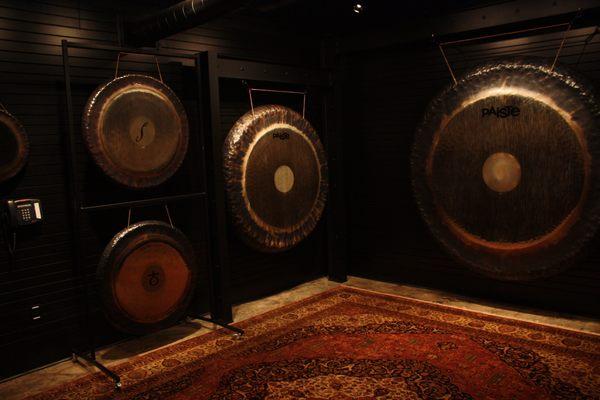
The human ear perceives sound between approximately 20 Hz and 20,000 Hz. Below 20 Hz lies infrasound—frequencies too low to hear but not too low to feel. Large gongs, massive organ pipes, and certain natural phenomena produce these subsonic vibrations. They pass through walls, travel vast distances, and interact with the human body in ways that audible sound cannot.
Your organs, it turns out, have resonant frequencies. When infrasound matches these frequencies, the organs vibrate. The implications for sound healing—and for understanding why large instruments feel different from small ones—are profound.
What Is Infrasound?
Infrasound refers to acoustic waves below 20 Hz. At these frequencies, sound behaves differently:
- Longer wavelengths—a 10 Hz wave is about 34 meters long, allowing it to pass through solid objects that would block higher frequencies
- Less atmospheric absorption—infrasound can travel hundreds of kilometers
- Physical sensation—rather than "hearing" these frequencies, we feel them as pressure, vibration, or physical unease
Natural sources of infrasound include earthquakes, volcanoes, ocean waves, wind, and large animal calls (elephant communication uses infrasound). Human sources include large vehicle engines, industrial machinery, building ventilation systems, and—notably for our purposes—large musical instruments.
The Resonant Frequencies of Organs
Every physical structure has resonant frequencies—the specific vibrations at which it naturally oscillates. Your body is no exception. Research in biomechanics and acoustic medicine has mapped the approximate resonant frequencies of various organs and body systems:
| Body Part / System | Resonant Frequency |
|---|---|
| Whole body (standing) | 5-8 Hz |
| Head | 20-30 Hz |
| Eyeballs | 18-19 Hz |
| Chest cavity | 50-100 Hz |
| Abdominal organs | 4-8 Hz |
| Heart | ~7 Hz |
| Liver | ~5 Hz |
| Spine | 10-12 Hz |
When external vibration matches these frequencies, the corresponding body part resonates—vibrating more intensely than surrounding tissue. This is why certain frequencies produce specific physical sensations, and why prolonged exposure to some infrasound frequencies causes discomfort or harm.
The Fear Frequency: 18.9 Hz
In 1998, engineer Vic Tandy was working in a laboratory that had a reputation for being "haunted." Workers reported feelings of unease, peripheral visual phenomena, and cold sweats. Tandy noticed that a fencing foil clamped in a vice was vibrating on its own.
Investigation revealed that a new extraction fan was producing infrasound at 18.9 Hz—remarkably close to the resonant frequency of the human eyeball. At this frequency, the eye vibrates, causing smeared peripheral vision that the brain interprets as movement. Combined with the general unease that infrasound produces, the "ghost" was explained.
18.9 Hz has since been called the "fear frequency." It sits just below conscious hearing, causes the eyeballs to resonate (producing visual disturbances), and triggers physiological stress responses. Many reportedly "haunted" locations have been found to contain infrasound sources—old pipes, wind effects, or mechanical systems.
The military has researched infrasound for crowd control and area denial—frequencies that cause nausea, disorientation, or panic without visible cause. This is sound as weapon.
Large Gongs and Infrasound
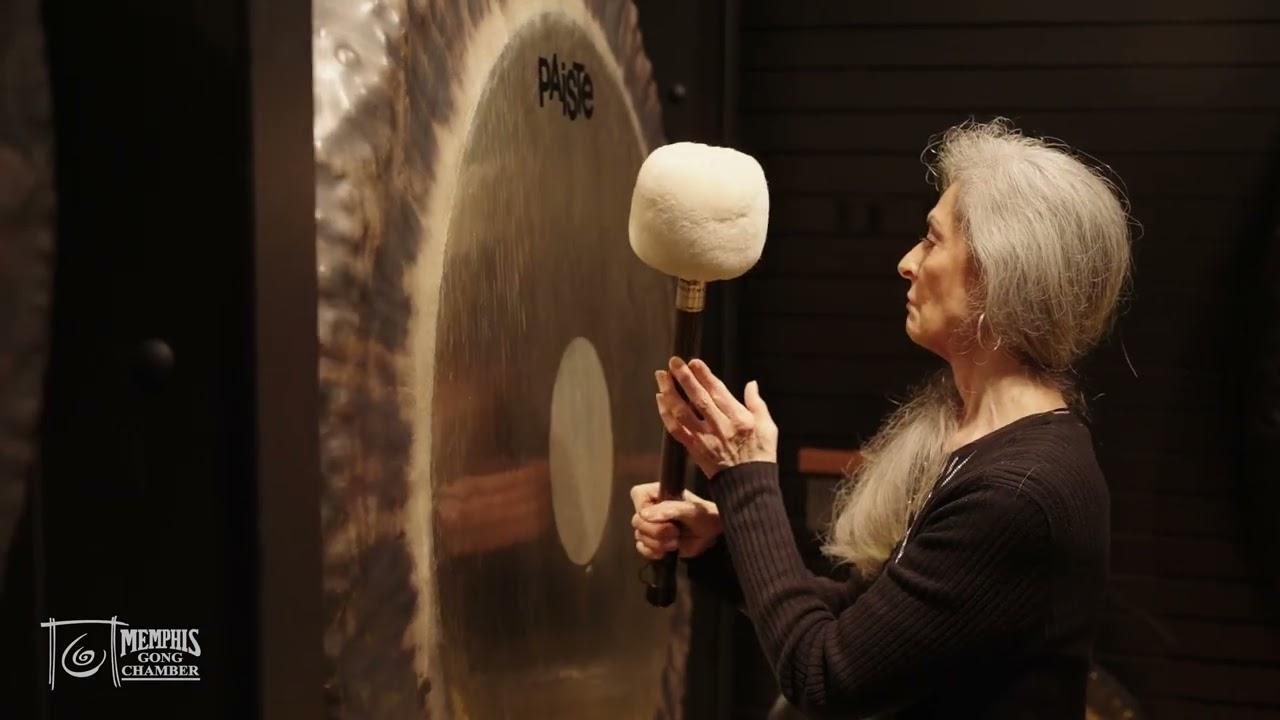
For sound healers, the relevance is more benign: large gongs produce significant infrasonic content alongside their audible frequencies.
- 32-40" gongs: Fundamentals around 60-100 Hz, with subharmonics extending into infrasonic range
- 50-60" gongs: Fundamentals approaching 40-60 Hz, substantial infrasonic undertones
- 80" gongs (Paiste symphonic): True infrasonic fundamentals below 20 Hz
This is why large gongs feel different from small ones. A 20" gong produces audible sound; an 80" gong produces a physical experience. Participants in gong baths with large instruments report feeling the sound in their chest, belly, and bones. They are not imagining this—their organs are resonating.
The same principle applies to large singing bowls, especially the massive Himalayan temple bowls that can exceed 20" in diameter. These instruments produce low fundamentals that border on infrasonic, creating whole-body vibration rather than mere sound.
Vibroacoustic Therapy
The clinical application of these principles is vibroacoustic therapy (VAT), developed in the 1980s by Norwegian researcher Olav Skille. VAT uses speakers or transducers embedded in beds, chairs, or mats to deliver specific low frequencies directly to the body.
Typical VAT frequencies range from 30-120 Hz—low enough to produce physical vibration, high enough to be precisely controlled. Clinical applications include:
- Pain management: Particularly for fibromyalgia and chronic pain conditions
- Spasticity reduction: In cerebral palsy and similar conditions
- Pulmonary function: Helping clear mucus in cystic fibrosis patients
- Anxiety and stress reduction: General relaxation applications
The mechanism appears to involve direct mechanical stimulation of tissue, possible effects on cellular metabolism, and nervous system responses to whole-body vibration. It is, essentially, clinical sound healing with controlled parameters.
The Schumann Resonance
The Earth itself produces infrasound. The Schumann resonances are electromagnetic frequencies generated by lightning activity in the cavity between Earth's surface and the ionosphere. The fundamental frequency is approximately 7.83 Hz, with harmonics at 14.3, 20.8, 27.3 Hz and beyond.
7.83 Hz falls within the range of human alpha-theta brainwave states and close to the resonant frequency of the heart and abdominal organs. Some researchers hypothesise that humans evolved in synchrony with this frequency and that modern environments (with electromagnetic pollution and shielded buildings) disconnect us from it.
Whether the Schumann resonance has direct biological effects remains debated. What is clear: frequencies in this range affect human physiology. Whether the source is electromagnetic (Schumann) or acoustic (gong), the body responds.
Practical Applications

Instrument Selection
If you want to work with infrasonic frequencies, you need large instruments. A 10" singing bowl will not produce meaningful infrasound no matter how you play it. Consider:
- Large gongs (36"+) for infrasonic undertones
- Large Himalayan bowls (16"+) for low fundamentals
- Bass tuning forks designed for body placement
- Vibroacoustic equipment for direct transmission
Room Considerations
Infrasound interacts with room boundaries, creating standing waves and null points. A frequency that produces intense sensation in one spot may be barely perceptible two meters away. Experiment with placement and be aware that your experience at the gong may differ from your clients' experience across the room.
Cautions
High-intensity infrasound can cause discomfort, nausea, and disorientation. While therapeutic applications use controlled, moderate levels, be aware that very large gongs at full volume produce powerful subsonic energy. Build intensity gradually. Watch for signs of distress. Offer participants the option to move if sensations become uncomfortable.
Conclusion
Below the threshold of hearing lies a realm of frequency that nonetheless affects the body profoundly. Your organs have resonant frequencies; large instruments produce infrasound; the interaction is physical, measurable, and significant.
When a participant in a gong bath says the sound went "through them," they are describing physics, not metaphor. The subsonic frequencies literally passed through their body, vibrating tissue and organ. The boundary between hearing and feeling dissolves at these frequencies.
Understanding this expands the palette of sound healing beyond what we typically think of as "sound." The largest instruments access this hidden dimension—the frequencies we don't hear but absolutely feel.