In the gamelan orchestras of Java and Bali, young musicians learn that the gong is not merely struck—it is awakened. The Javanese term nguripake (to bring to life) describes what Western practitioners call "warming" or "priming" the gong: the essential preparatory work that allows the instrument to speak with its full voice.
A gong played cold produces a fraction of its potential. A gong properly warmed becomes something else entirely—an instrument capable of filling a room not just with sound but with physical sensation.
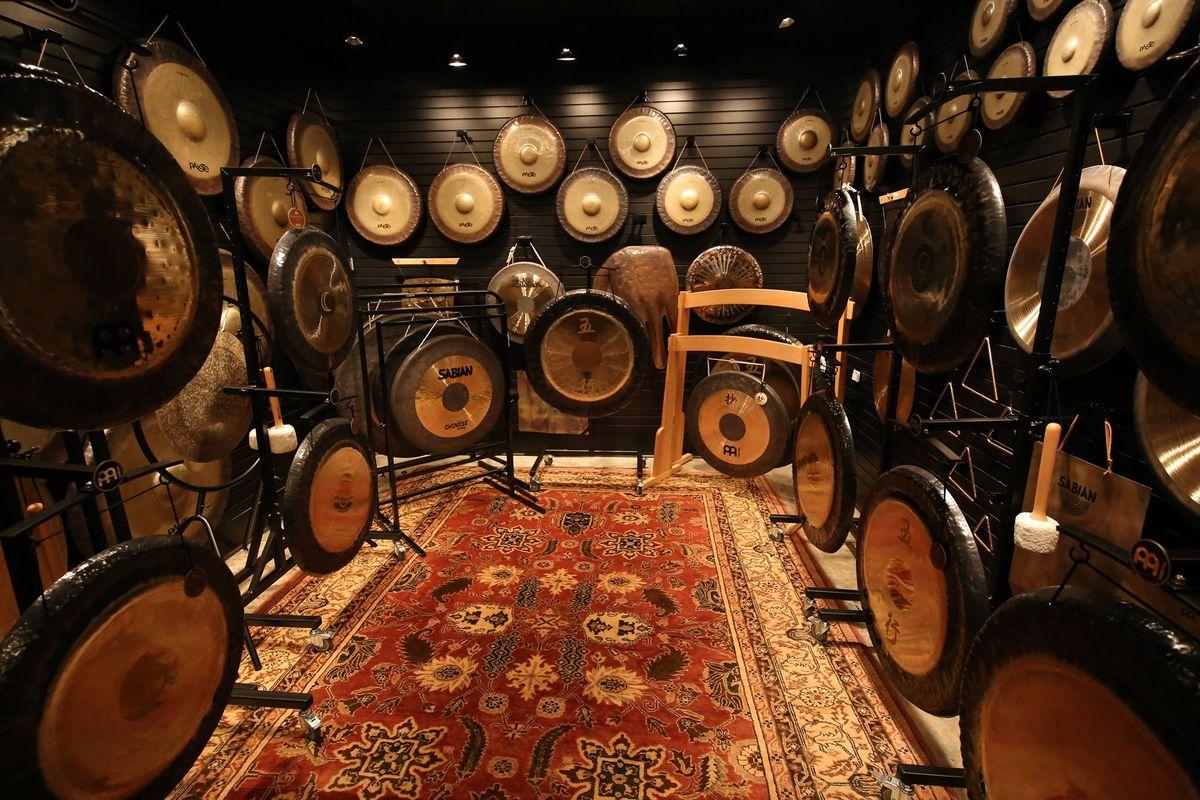
Warming the Gong
Before any session, the gong must be gradually brought into resonance. This serves several purposes: it physically warms the metal (which affects its vibrational properties), it builds the complex overtone series that gives the gong its characteristic voice, and it allows the player to attune to the instrument's current state.
The Warming Sequence
- Begin at the edge. Using a soft mallet, make gentle circular motions around the outer rim. You are not trying to produce volume—you are inviting the gong to vibrate. The edge responds first; let it.
- Move inward slowly. Gradually work toward the centre with light, consistent pressure. The gong should begin to "hum" beneath your mallet—a quiet activation of its fundamental tone.
- Listen for the buildup. As you continue, overtones will begin to emerge and layer. The sound grows more complex without growing louder. This is the gong waking up.
- Circle the deep zone. Once the gong is humming, bring your attention to the lower-middle area (more on this below). Gentle strokes here begin to activate the deepest frequencies.
- Rest. Let the sound decay completely. The gong is now primed.
This process takes three to five minutes. Rushing it produces a session with less depth, fewer overtones, and a gong that feels "tight" rather than open. In the Balinese tradition, this preparation is considered as important as the performance itself.
The Zones of the Gong
A gong is not a uniform surface. Different areas produce radically different tones, and understanding this geography is fundamental to expressive playing.
Gong Zone Map (viewed from playing position)
              12 o'clock
                  ↑
           ┌──────────────┐
          /   EDGE ZONE    \
         /  (bright, shimmery)\
        │    ┌──────────┐     │
   9    │   /  MIDDLE   \    │   3
o'clock │  │    ZONE     │   │ o'clock
  ←     │  │  (balanced) │   │   →
        │   \           /    │
        │    └────┬────┘     │
         \        │         /
          \  DEEP ZONE     /
           \  (5-7 o'clock)/
            └──────────────┘
                  ↓
              6 o'clock
The Centre (Boss/Nipple)
If your gong has a raised centre—called the boss or nipple—this area produces the highest, most focused tone. Striking the boss creates a clear, bell-like sound with rapid decay. Useful for punctuation, but not the source of the gong's power.
The Edge Zone
The outer rim produces higher harmonics, shimmering overtones, and what players describe as the "splash." Playing the edge adds brightness and complexity. Friction techniques (running a mallet along the rim) create ethereal, singing tones from this zone.
The Middle Zone
The area between centre and edge produces the most balanced tone—a blend of fundamental and overtones. Most general playing occurs here. The sound is full without being overwhelming.
The Deep Zone (5 to 7 O'Clock)
Here lies the gong's deepest voice.
The lower-middle portion of the gong—roughly between the 5 o'clock and 7 o'clock positions—produces the richest fundamental tones. This is where the gong speaks from its belly. Strikes here activate low frequencies that are felt as much as heard, the subsonic undertow that makes a gong bath a physical experience.
Why this zone? The physics involves how the gong's vibration patterns (called modes) interact with its suspension point. The lower portion, hanging freely and with the most mass below the strike point, sustains low-frequency oscillation most effectively. It's also where gravity assists rather than dampens the vibration.
When building a gong bath to its peak, focus your strongest strokes in this zone. When you want the room to feel the sound in their bodies, play here. When you want the gong to growl and thunder, this is where you go.
Mallet Selection
The mallet is half the instrument. Different coverings and weights produce entirely different voices from the same gong. A well-chosen mallet collection transforms a single gong into a dozen instruments.
The practitioner's wisdom: Better to invest in one quality gong and many mallets than several gongs and few mallets. Each mallet unlocks a different voice from the same instrument. A comprehensive mallet collection—soft, medium, hard, friction—gives you more sonic range than adding a second gong with only one mallet each.
The Fundamental Principle
Larger mallets produce deeper tones. A heavier mallet head moves more mass in the gong's surface, activating lower frequency modes. Small mallets produce brighter, more articulate sounds with faster decay. Match your mallet size to your intention: massive mallets for earth-shaking fundamentals, smaller mallets for detail work and overtone clarity.
Mallet Types
- Soft wool/fleece mallets: Warm, round tones. Best for priming, sustained rolls, and gentle work. Emphasises fundamentals over overtones.
- Medium felt mallets: Balanced response. The standard for most playing. Good projection without harshness.
- Hard rubber or plastic core: Brighter attack, more overtones, sharper articulation. Useful for accents but can sound harsh if overused.
- Friction mallets: Rubber or leather-wrapped mallets designed for continuous contact. Creates singing, whale-like tones by exciting the gong's edge through sustained pressure.
Professional Mallet Brands
Paiste: The industry standard. Paiste manufactures mallets specifically calibrated for their gongs—the M1 through M7 series progress from small and bright to large and thunderous. Their recommendations pair specific mallet models with specific gong diameters. If you play Paiste gongs, their matched mallets are the logical starting point.
Meinl: Known for quality at accessible price points. Their Sonic Energy line includes dedicated gong mallets in various sizes and hardnesses. Good entry point for building a collection without the premium cost of speciality brands.
Dragonfly Percussion: Founded in 2000 by Dinesh Joseph in the back hallway percussion workshop at the Juilliard School, Dragonfly began with a single pair of Magic Flute sticks. Joseph, a trained percussionist, brought orchestral precision to mallet-making. Now handcrafted in Buffalo, New York, Dragonfly mallets are favoured by professional gong players for their consistency and attention to detail. They offer an extensive range including resonance mallets designed specifically for therapeutic gong work. Worth the investment for serious practitioners.
Mike Balter: Originally a concert percussion manufacturer, Balter mallets bring orchestral precision to the gong world. Their weighted mallets are valued for predictable response and durability. A crossover choice for players with percussion backgrounds.
Specialty Mallets
Flumies: Soft, fluffy mallets (the name says it all) designed for the gentlest possible attack. Flumies produce pure fundamental tone with minimal overtone excitation—ideal for meditation work where subtlety matters. They're also excellent for priming, as they activate the gong without any harshness.
Whale Mallets: Large, heavily padded mallets that produce deep, oceanic tones reminiscent of whale song. The name reflects both the sound they produce and often their size—some whale mallets have heads larger than a grapefruit. These are your tools for maximum low-frequency immersion.
E-Wands (Energy Wands): Friction implements rather than traditional mallets. E-wands are designed for continuous contact with the gong surface, producing sustained singing tones through controlled friction. The technique requires practice—too much pressure chokes the vibration, too little loses contact—but mastered, e-wands unlock ethereal textures impossible with striking alone.
Many players use multiple mallets in a session—flumies for priming, medium felt for the body of the work, whale mallets for the climactic build, and e-wands for textural variety. A professional kit might include six to twelve mallets for a single gong.
Building and Releasing
The gong bath is not a sustained assault of sound. It breathes. Chinese gong traditions speak of qǐ fú (起伏)—rising and falling, the wave-like structure that gives a performance shape.
The Build
- Begin with silence. Let the room settle.
- Warm strokes at the edge—barely audible.
- Gradually increase pressure and move toward the deep zone.
- Layer overtones by varying your stroke location and speed.
- As intensity builds, focus on the 5-7 o'clock zone for maximum power.
- At the peak, the gong should feel like it's playing itself—a wall of sound with its own momentum.
The Release
- Reduce stroke intensity gradually, not suddenly.
- Move back toward the edge, allowing brightness to re-emerge.
- Let longer silence between strokes.
- Final strokes should be gentle, almost questioning.
- End with complete silence. Let the last vibration decay fully before speaking or moving.
The silence after the gong is as important as the sound. The Zen tradition of ma (間)—the pregnant pause, the space between—applies here. Do not rush to fill it.
Additional Techniques
Muting
Placing a hand on the gong's surface while striking creates a muted, damped tone—shorter decay, more percussive. Useful for rhythmic work or creating contrast. The gamelan players use precise muting (tutup) as a fundamental technique.
Scraping/Friction
Dragging a mallet (especially rubber or leather) along the gong's surface creates continuous, evolving tones. The pitch shifts as you move across zones. With practice, you can produce whale-song effects, rising moans, and otherworldly textures.
Rolls
Rapid alternating strokes that blur into continuous sound. Begin slowly to find the rhythm, then accelerate. Rolls build intensity without single loud attacks—useful when you want power without harshness.
Water Gong
Lowering the gong into water while it vibrates produces dramatic pitch bends. A specialised technique requiring a tub or pool, but the effect—a descending, alien cry—is unique.
Care Notes
- Never strike a cold gong at full force. Warm it first.
- Clean with a soft dry cloth. Avoid chemical cleaners.
- Oils from hands can affect the surface; some players wear gloves.
- Store covered, away from temperature extremes.
- Check suspension ropes regularly for wear.
Beginning Practice
Before a session with others, spend time alone with your gong. Play every zone. Find where your particular instrument speaks most deeply. Each gong has its own character—its sweet spots, its dead zones, its voice. The map above is general; your gong will teach you its specifics.
Record yourself. Listen back. The gong sounds different from the playing position than it does in the room. What feels powerful to you may not translate; what seems subtle may fill the space beautifully.
And always: warm the gong. Nguripake. Bring it to life before asking it to speak.